
Your Grill Grate Is Mostly Air — and That’s the Real Reason Your Burgers Go Grey and Dinner Always Comes Out in Shifts

You have stood over a grill wondering why the burgers came out grey instead of brown. Why the onions ended up in the fire. Why the eggs were never an option at all, and why everybody ate in shifts while you stayed at the grill. It was never your technique. A grate is bars with gaps — most of your food is sitting over open air, not touching hot metal, and crust comes from contact, not from flame. So we put a flat top on the counter, took everything out of the box one piece at a time, and cooked on it for a month. Here’s what was in there, and the nine things that actually changed.
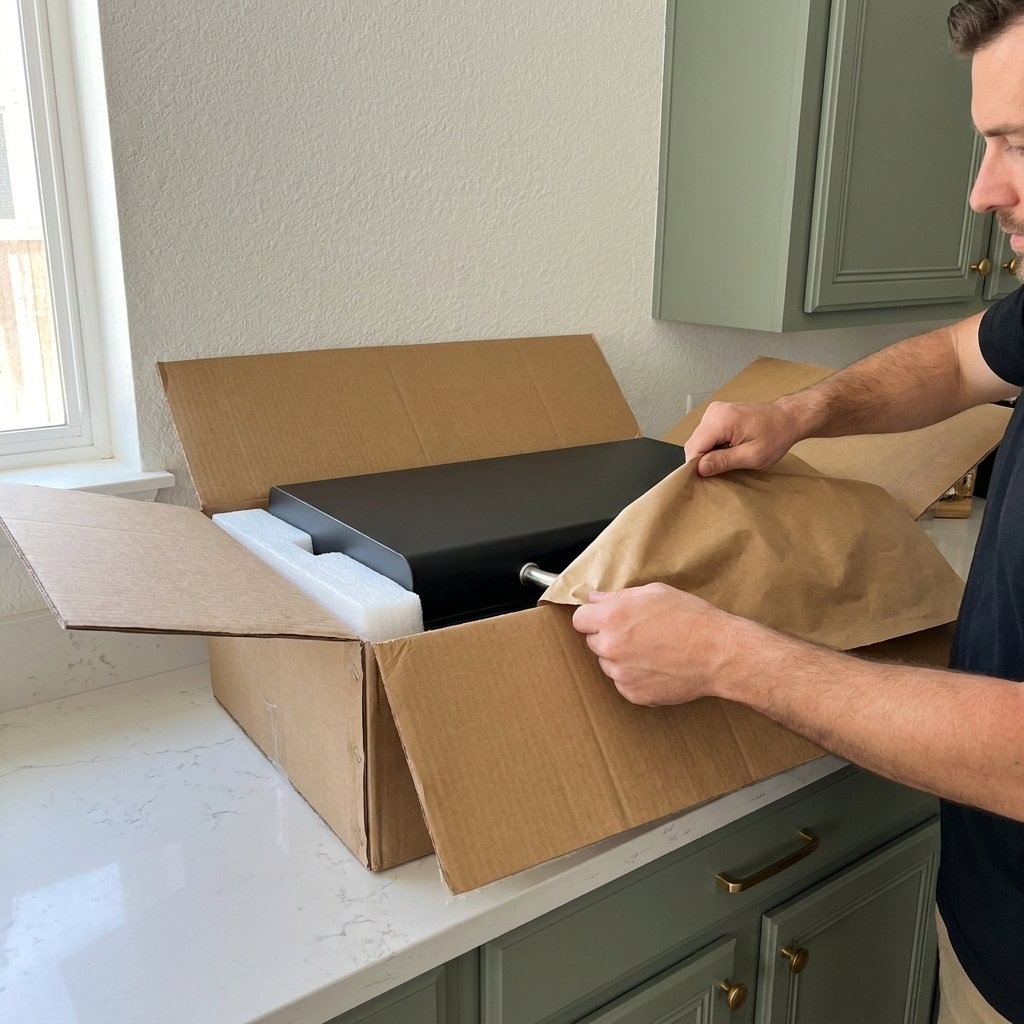
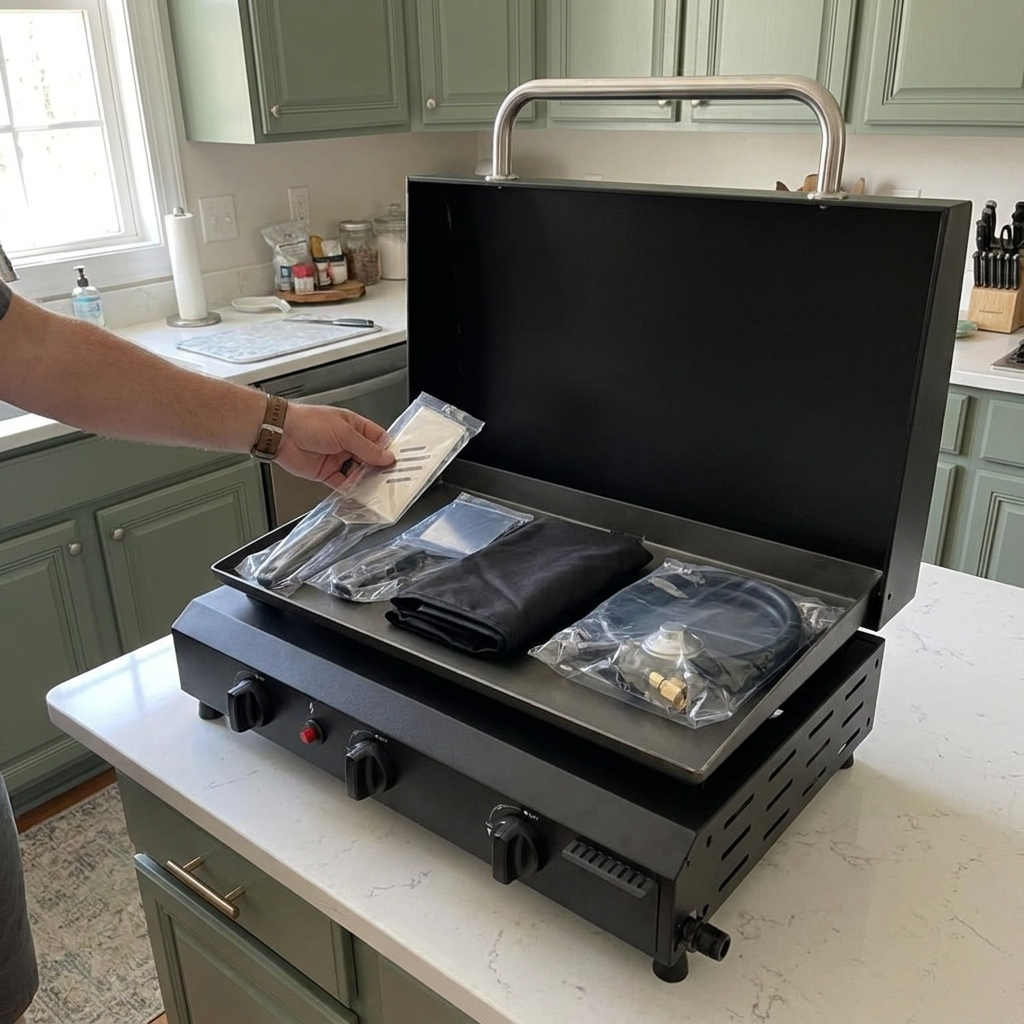
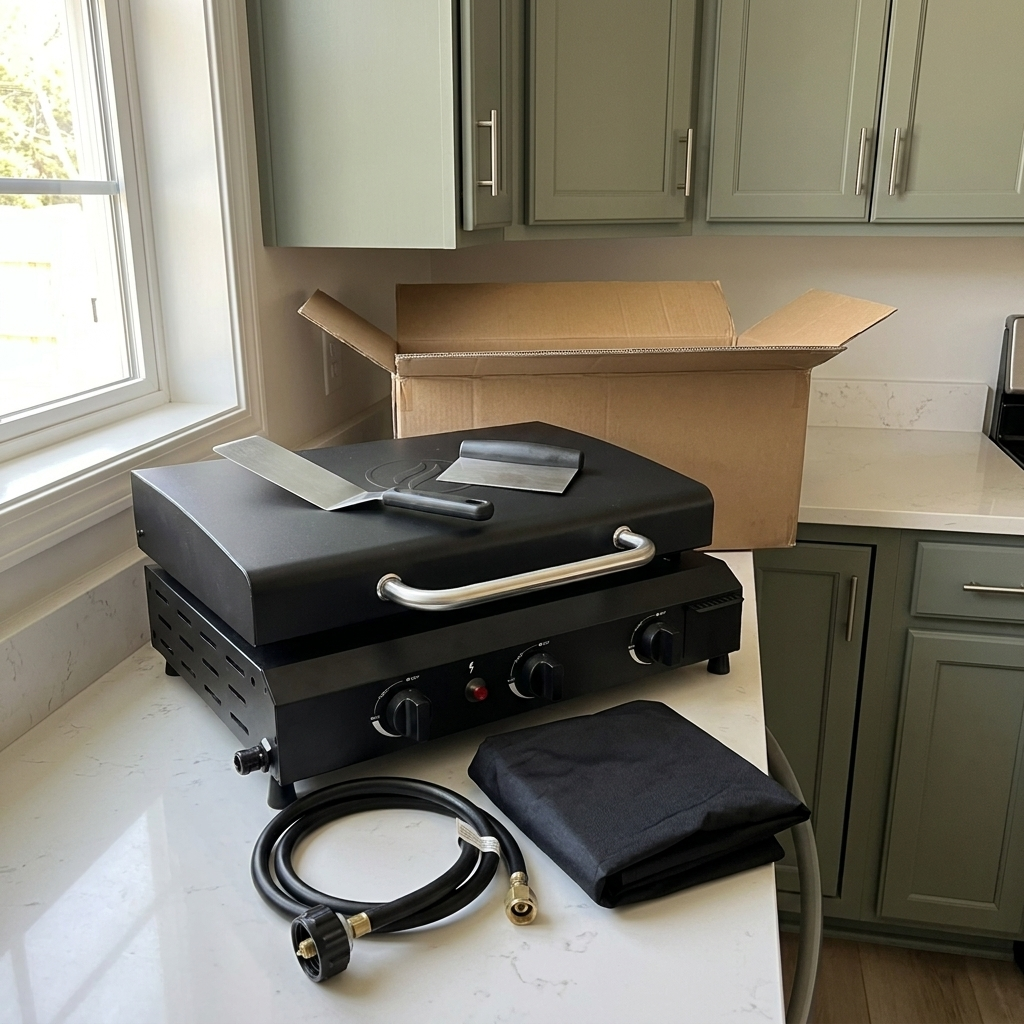
Everything That Came Out of One Box
No second order, no accessory page, no trip to the hardware store on Saturday morning.
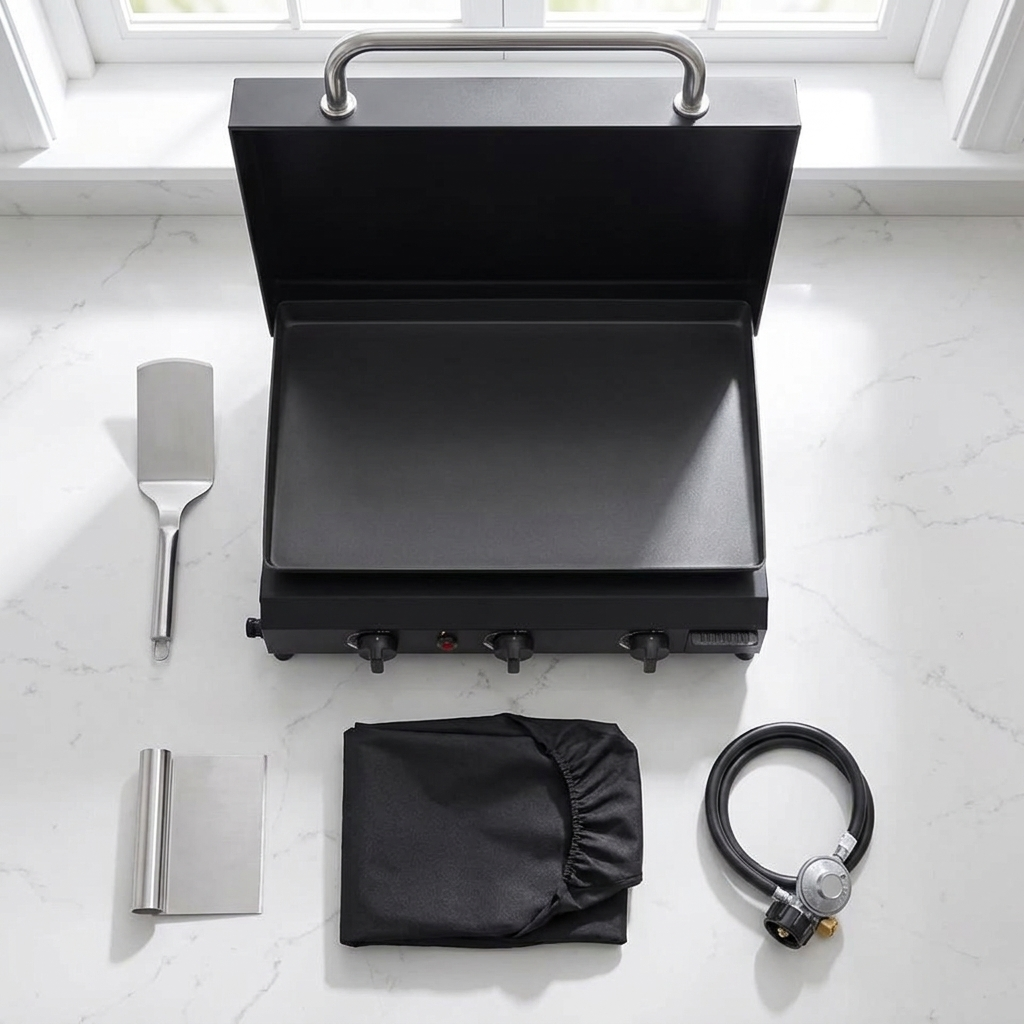
- The griddleOne continuous plate of flat steel with independently controlled burners underneath.
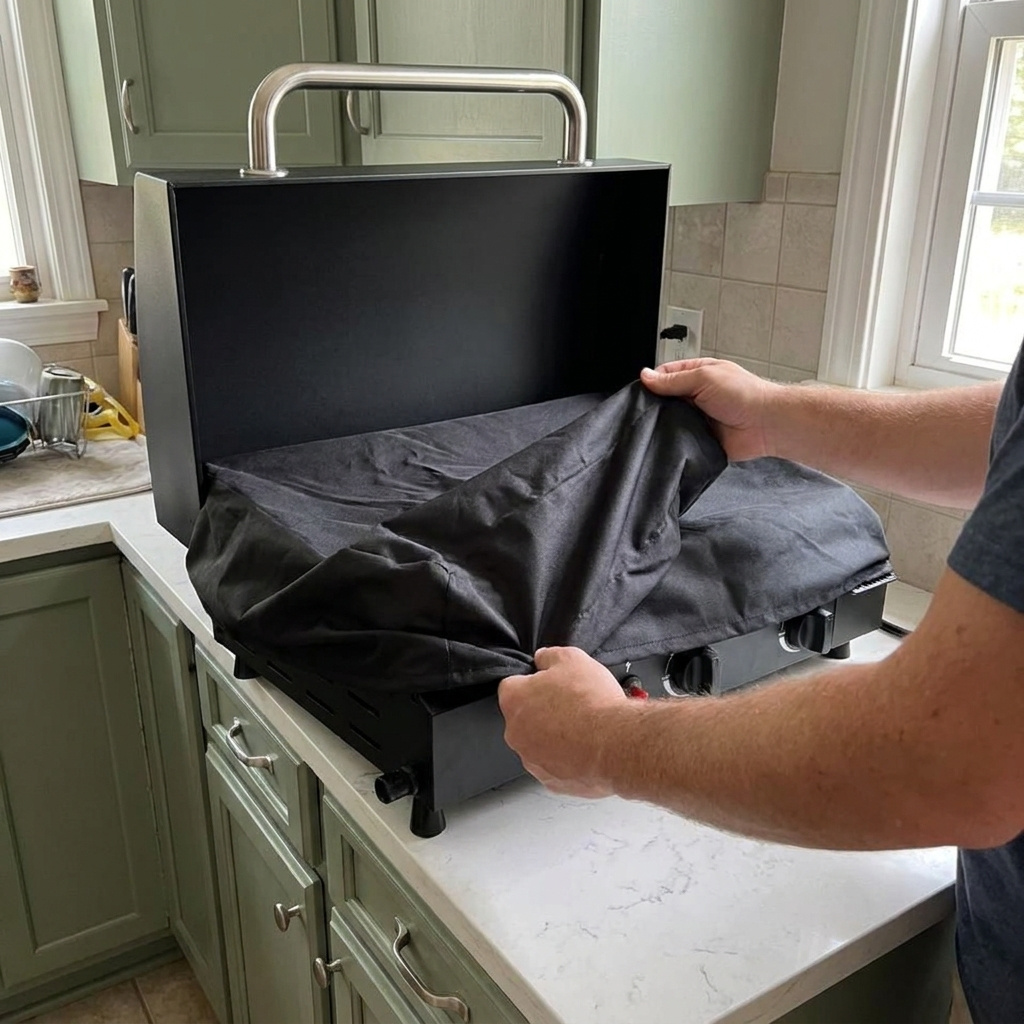
- The hinged hoodLifts on a hinge and shuts over the whole plate. No loose lid to find a home for.
- Stainless spatula — includedThe one you’d have bought on day two.
- Stainless scraper — includedThe tool the entire cleanup routine is built around.
- Fitted cover — includedMade for this griddle, so it actually fits it.
- Regulator hose — includedRuns it off a standard 20 lb propane tank, the same one your grill uses.
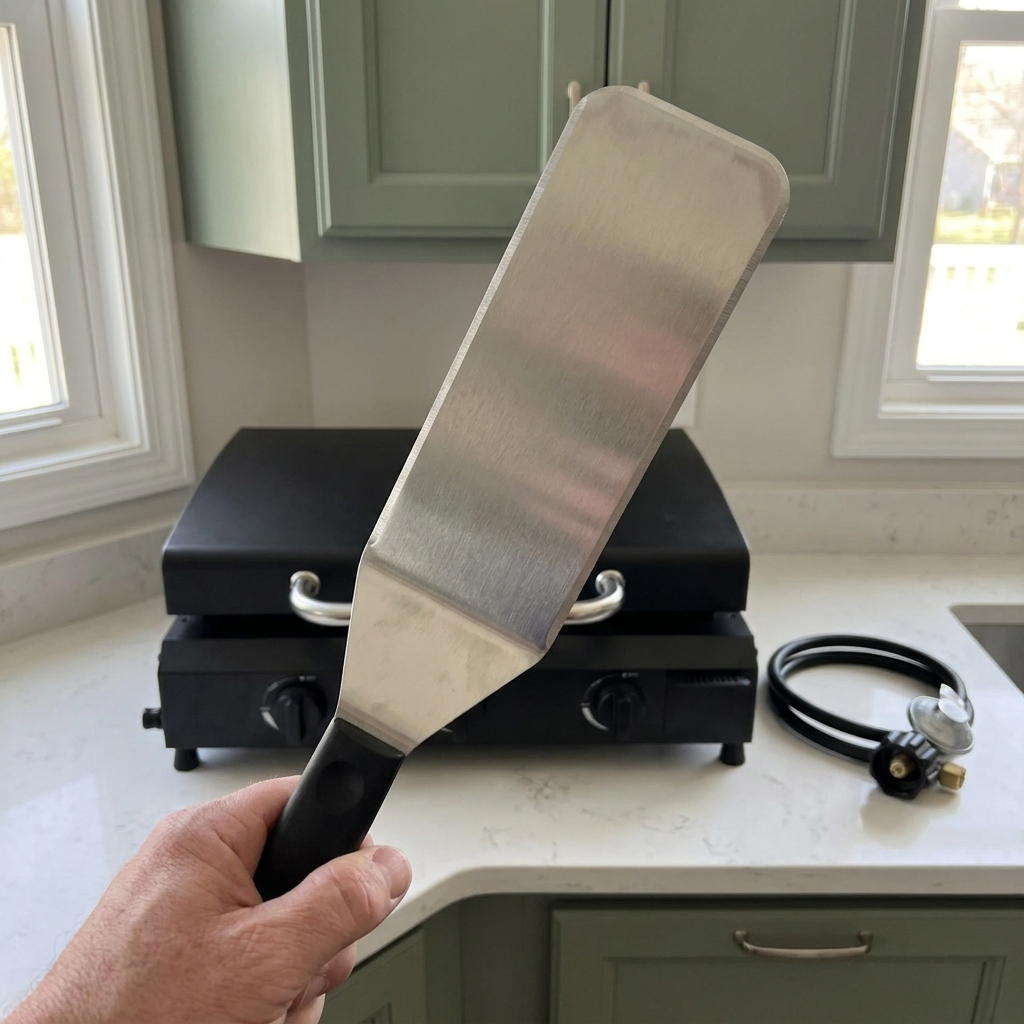
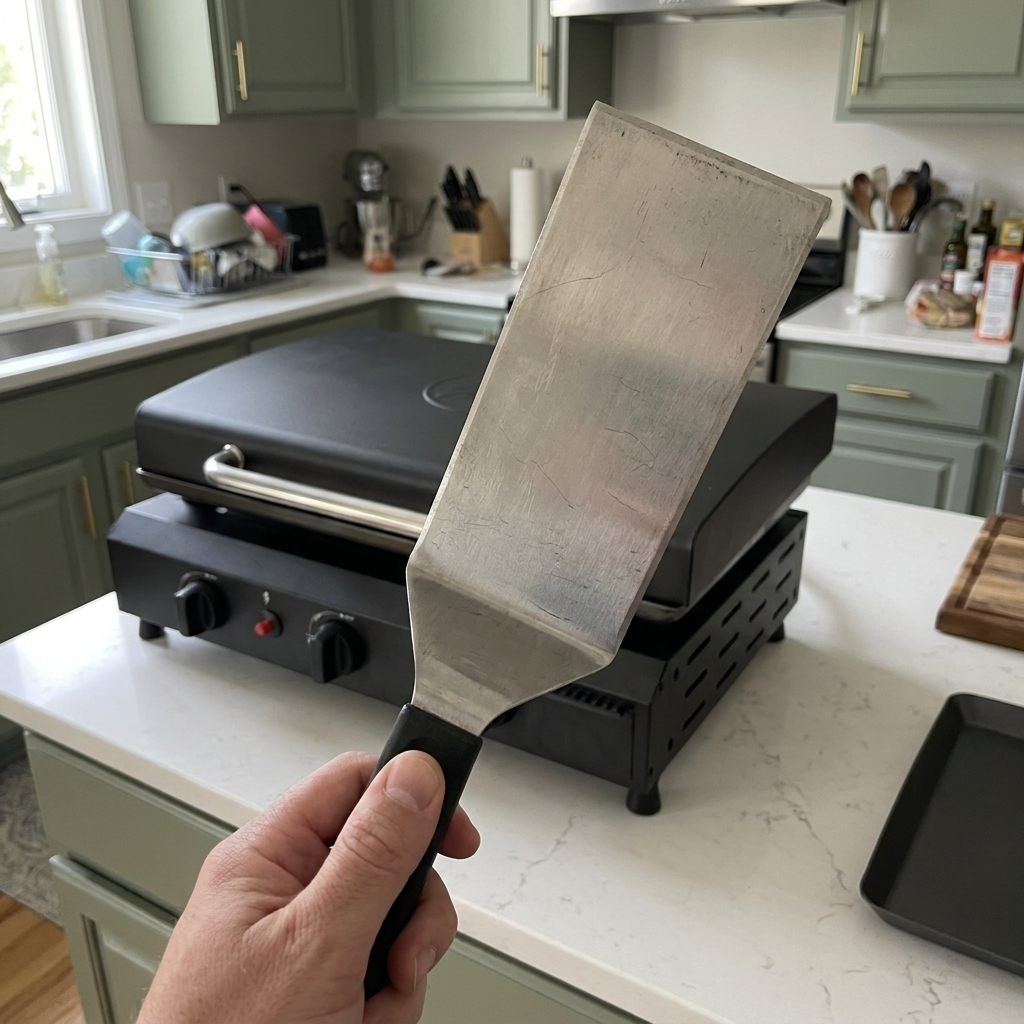
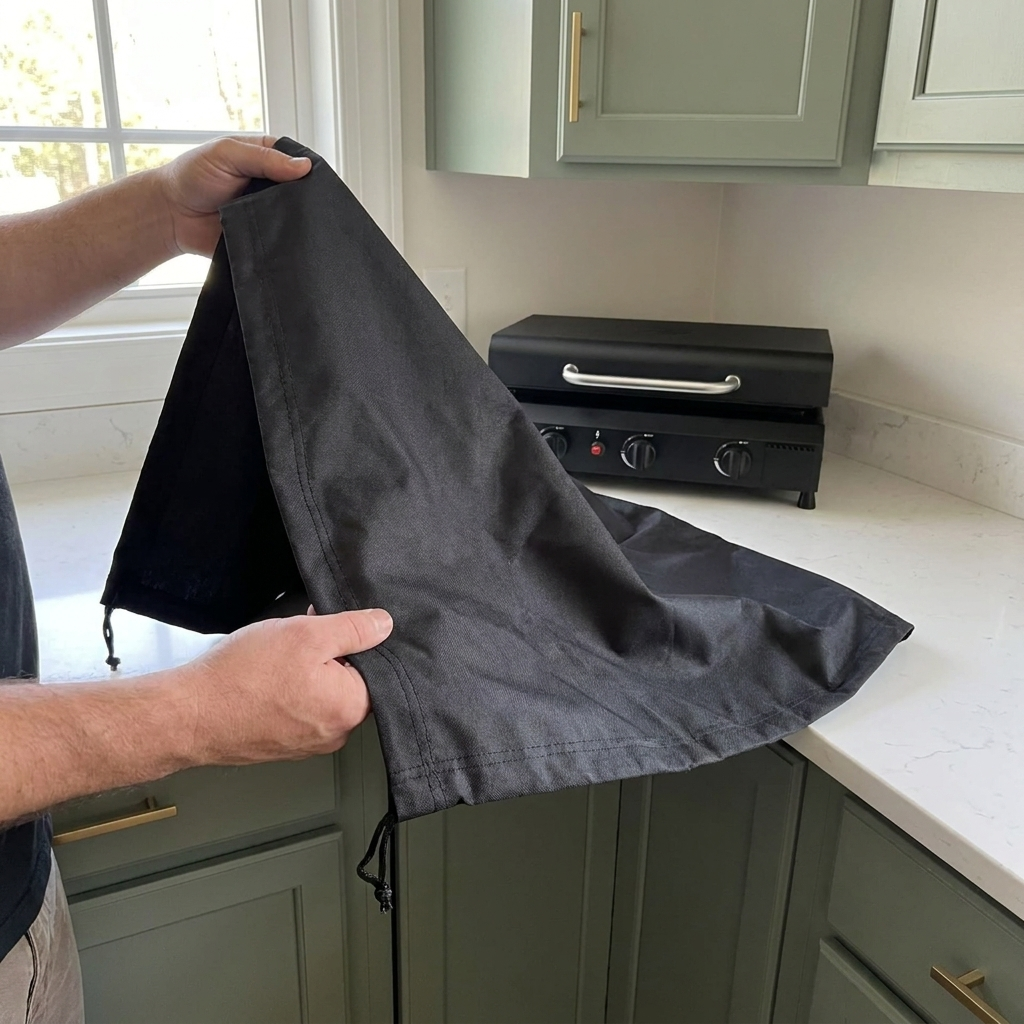
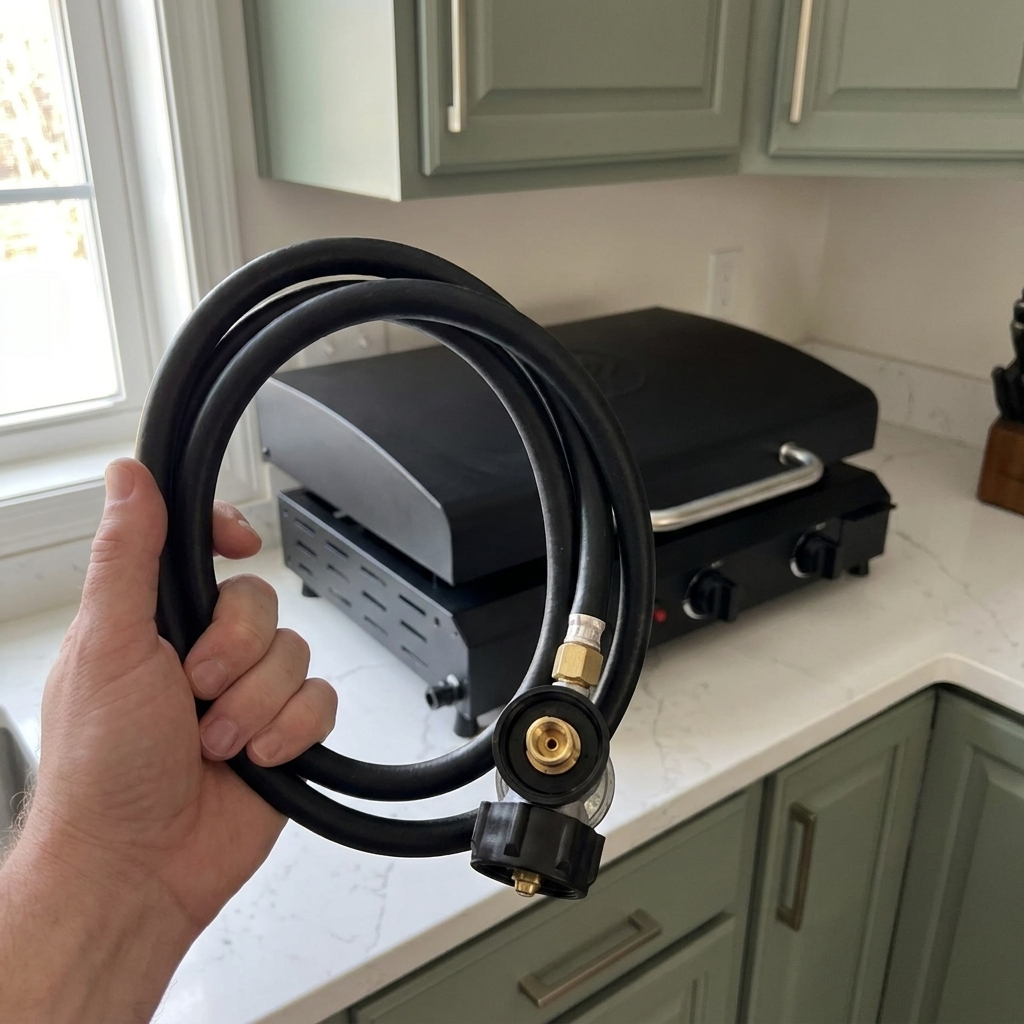
A grill grate is bars with gaps. Most of your food never touches metal.
Look straight down at your grate. Count the metal, then count the air between it. That air is where the heat isn’t.
Browning — the crust, the colour, the flavour you are actually chasing — happens where food makes contact with hot metal. Not where it is suspended over a flame. That single fact explains almost everything you have blamed yourself for: burgers that go grey and dry instead of dark and crisp, onions and peppers that end up in the coals, eggs and rice and shrimp that were never even on the menu, and a cookout that runs in shifts because only part of the surface is usable at a time.
On a grate
Food sits over gaps. Fat drips onto the flame and flares back up. Small things fall through. You cook in batches and something is always going cold.
On flat steel
Every square inch of the underside is against hot metal at once. Nothing drops. Fat runs across the plate instead of into fire. The whole meal finishes in the same minute.
That is the entire difference. Not a better grill — a surface that actually touches your food.
The Griddle Is Never the Last Thing You Buy — Except This Time
Most tabletop griddles arrive and then quietly cost you more. The tools are extra. The cover is extra. The hose that connects it to the 20 lb tank already sitting in your garage is extra. You paid for a griddle and you still can’t cook dinner on it tonight.
There is a name for this in the reviews: people call it the part that “prompts the need to make several additional purchases.” A 1 lb green bottle drains in three or four meals, so the tank adapter is not optional — it is the second thing everyone buys, usually after the first cook is already ruined.
FirePlate ships with the stainless spatula and scraper set, the fitted cover, and the regulator hose for a standard 20 lb tank — the exact three things the rest of the category sells you afterwards. Open it, season the surface, and cook the same day it lands.
Quotes on this page are verbatim from verified-purchase reviews of tabletop flat top griddles in this category — not reviews of FirePlate.

Sear on One Side, Hold on the Other — Everything Finishes Together
This is the part a grate can’t do. Solid flat steel across independently controlled burners means you run one zone hot for the sear and another low to hold — so the eggs aren’t cold by the time the burgers are done, and the onions don’t burn while the potatoes finish.
One surface, several temperatures, and a meal that lands on the table all at once instead of in shifts.
It Feeds Four at Once, Not Four in Rotation
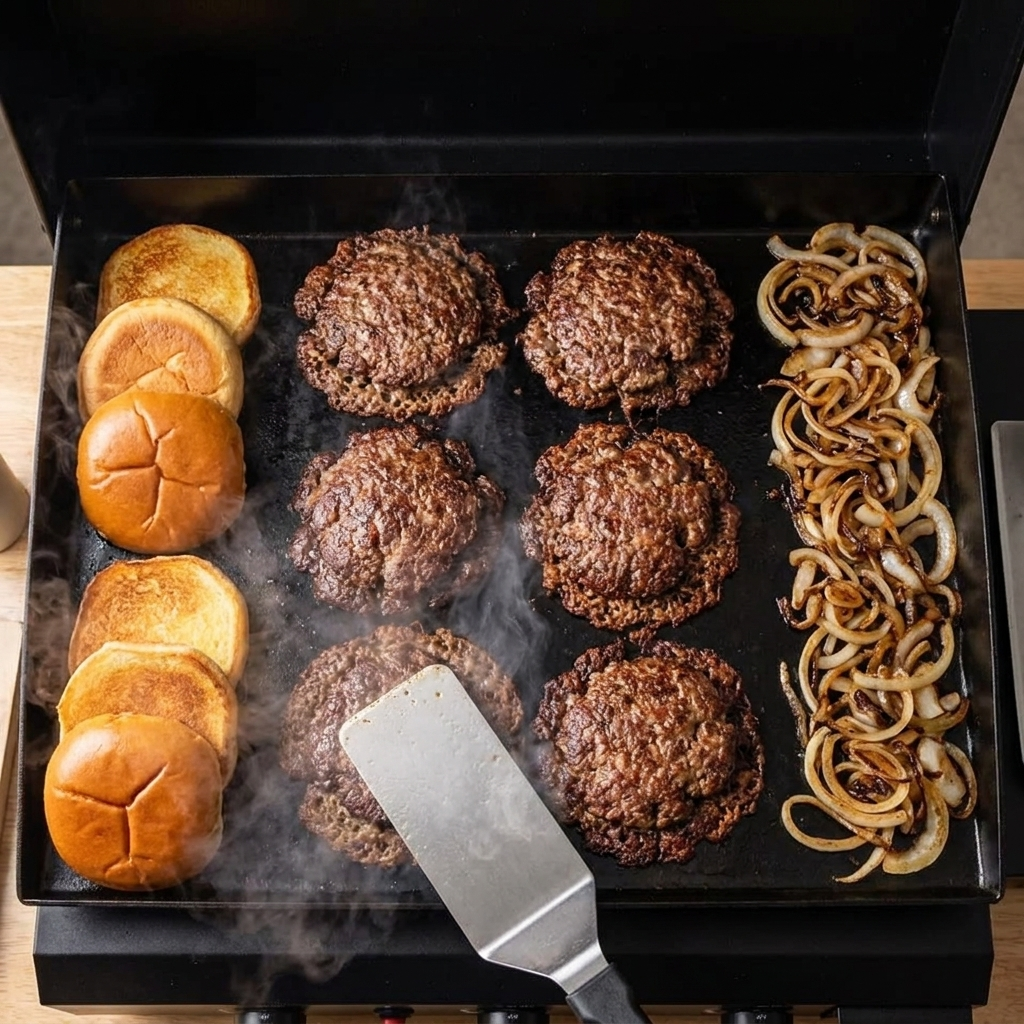
Small griddles turn dinner into a queue: cook, plate, reheat, repeat. This is the size where a whole meal for four goes down at the same time — four burgers with the onions beside them, or bacon, eggs and hash browns in three lanes without anything crowding.
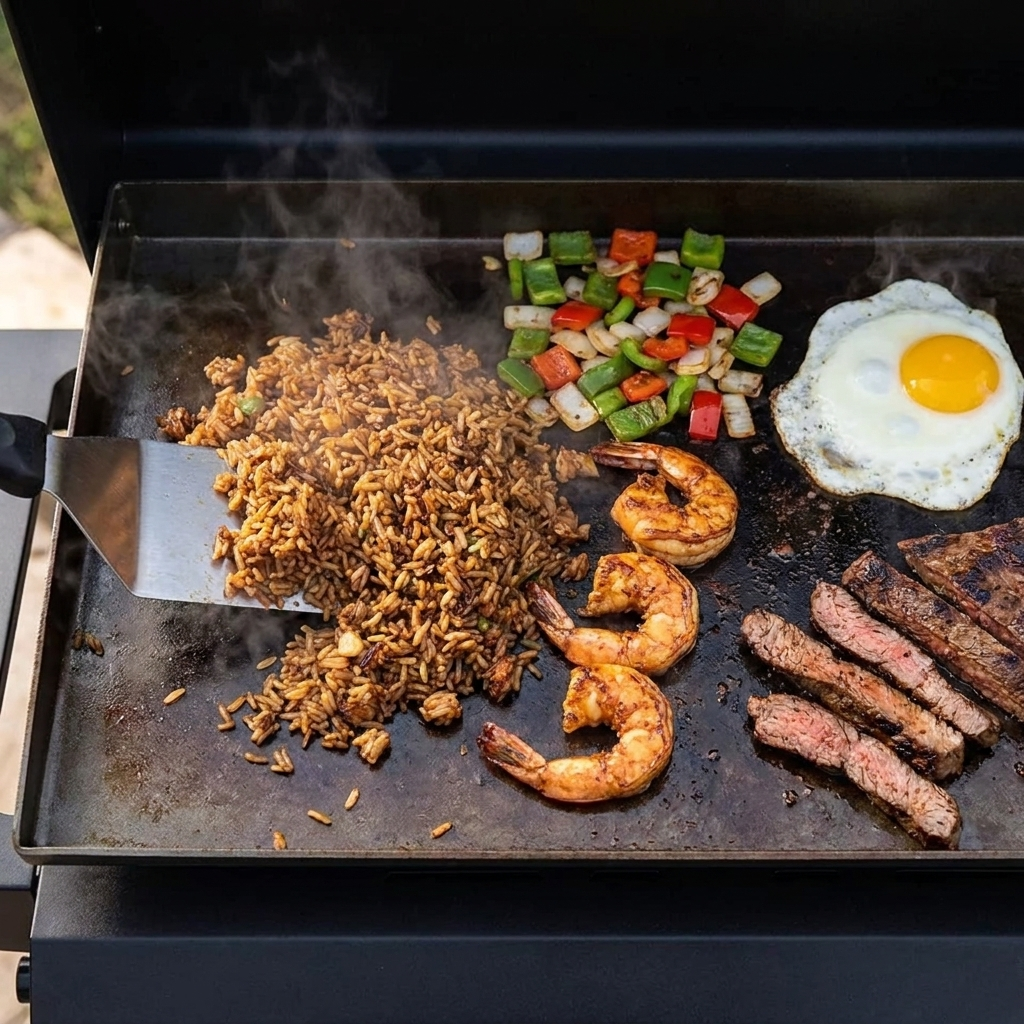
And because the surface is continuous, nothing falls through it. Diced peppers, shrimp, rice, sliced onion, an egg — all things a grate simply cannot hold.
The Hood Does Two Jobs, and Most People Only Think About One
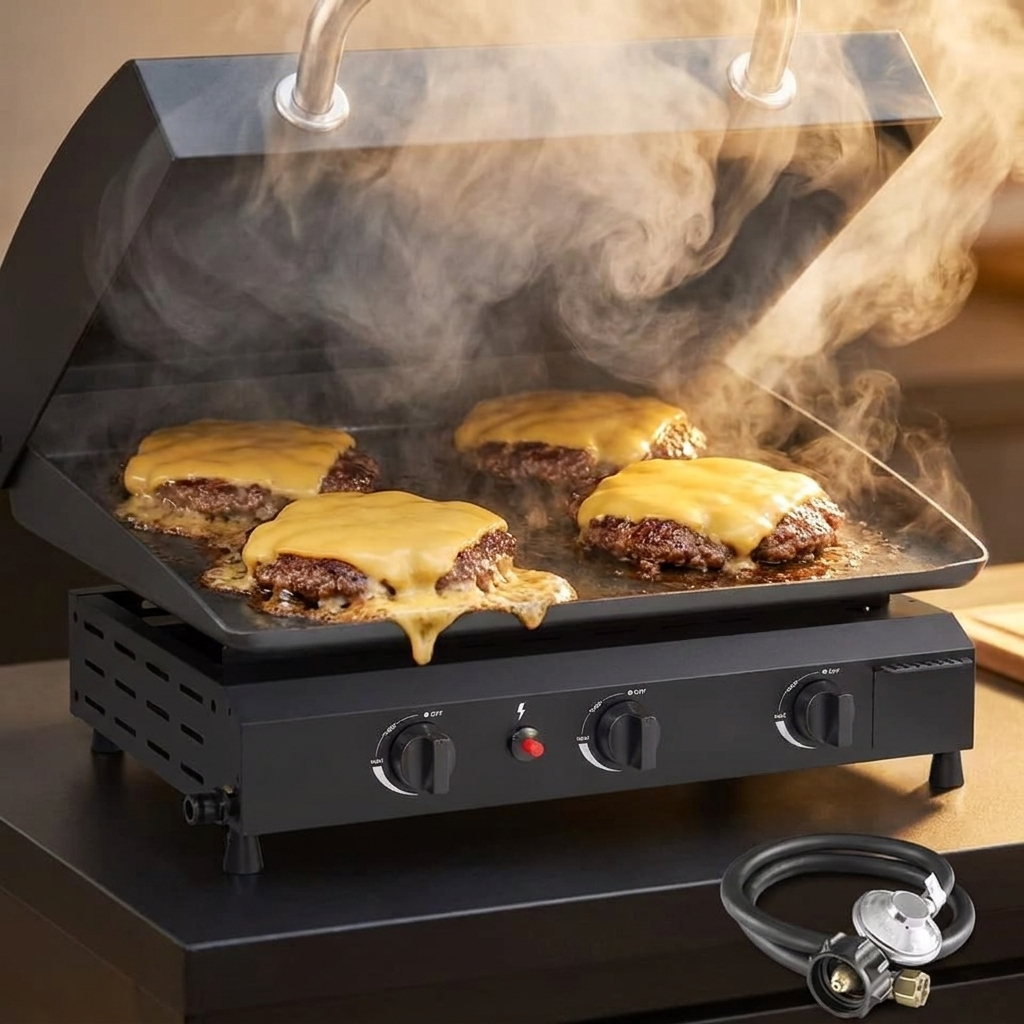
The first job is the obvious one. Drop the hood over a couple of smash burgers and the cheese goes in under a minute instead of three. Thick food finishes without drying out. A splash of water under a closed hood steams onions or buns.
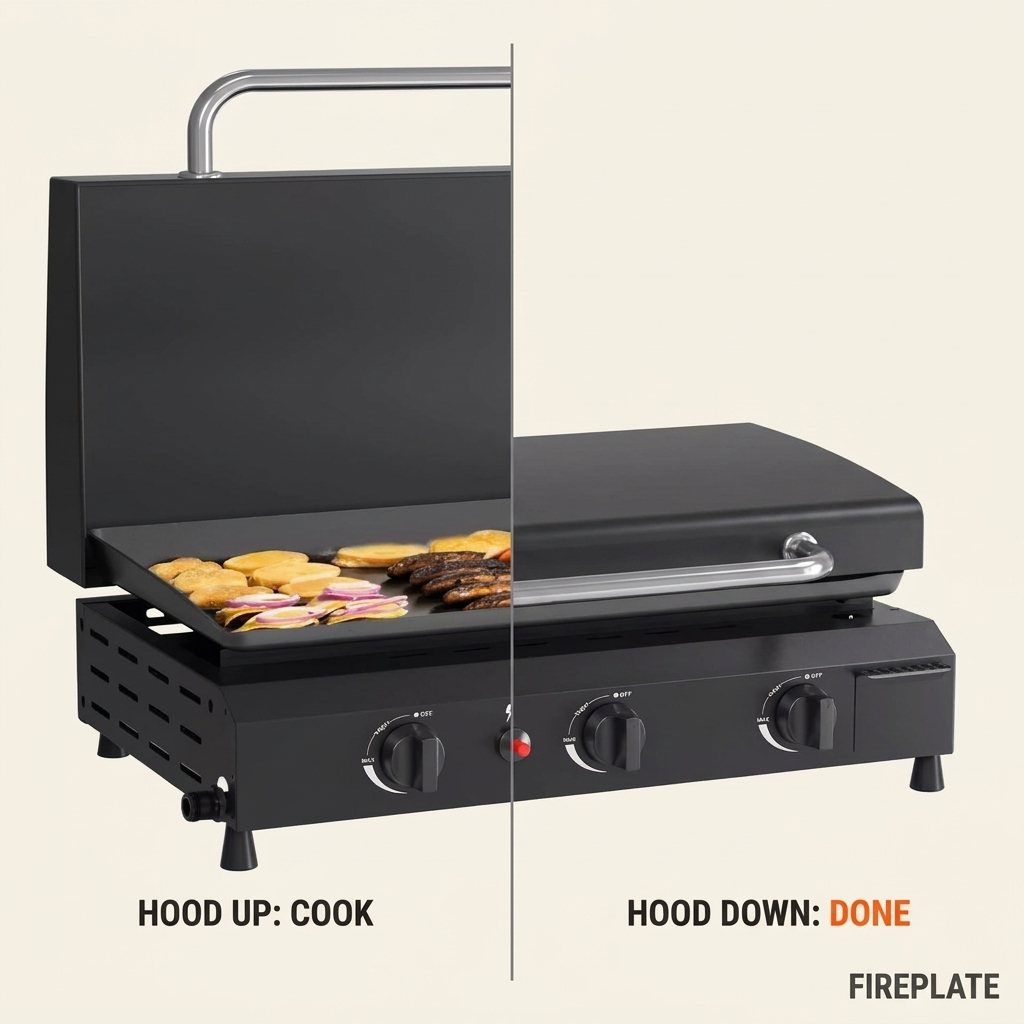
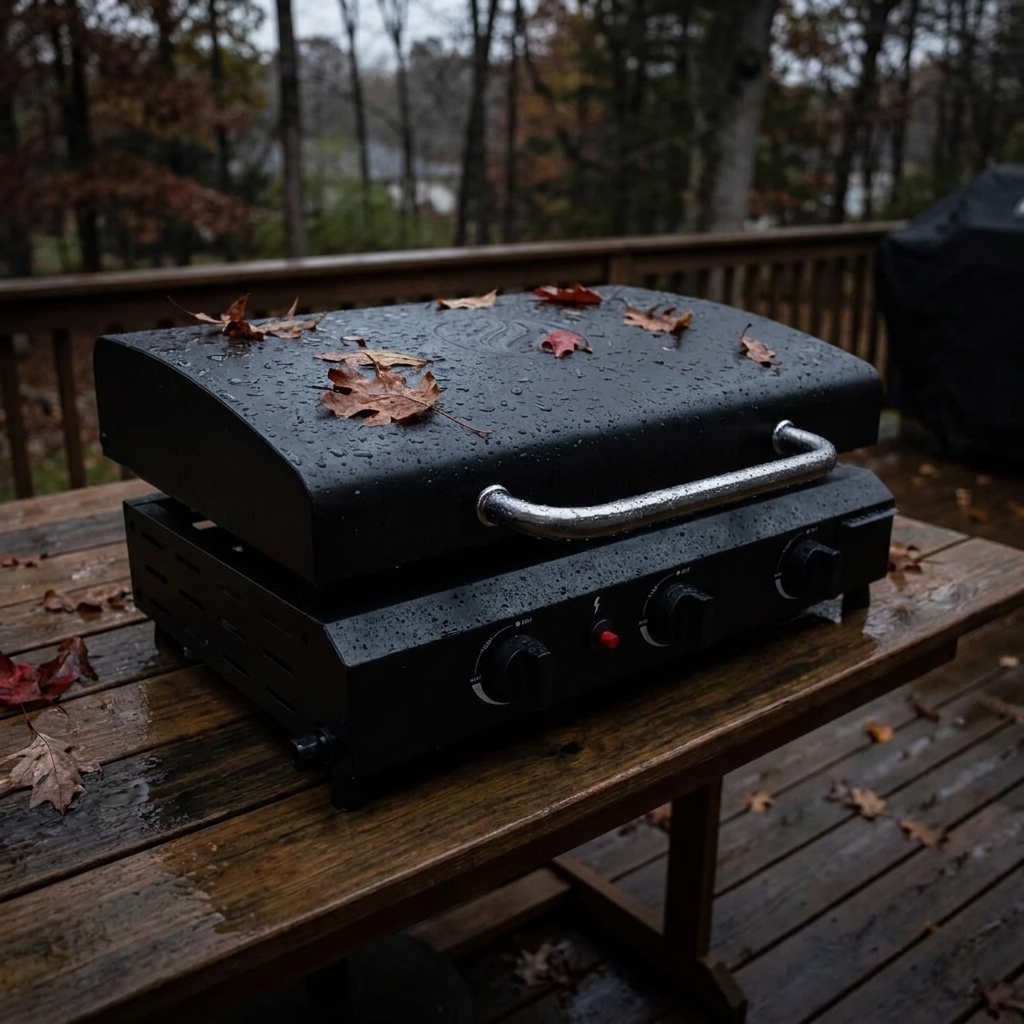
The second job is the one nobody sells you, and it’s the reason griddle owners on forums are cutting plywood to lay over their cooking surface and stuffing steel wool into the vents to keep mice out. A hinged hood shuts over the whole plate the second you’re done — weather off, leaves off, anything with four legs off. And it lifts on a hinge, so there’s no loose lid to find a home for on a crowded table.

It Takes the Grease, the Smoke and the Smell Out of Your Kitchen
Think about what bacon for five actually costs you indoors. Spattered stovetop, a pan to scrub, the smoke alarm, the windows open, and a house that smells like breakfast until Tuesday. In August you are also fighting your own air conditioning.
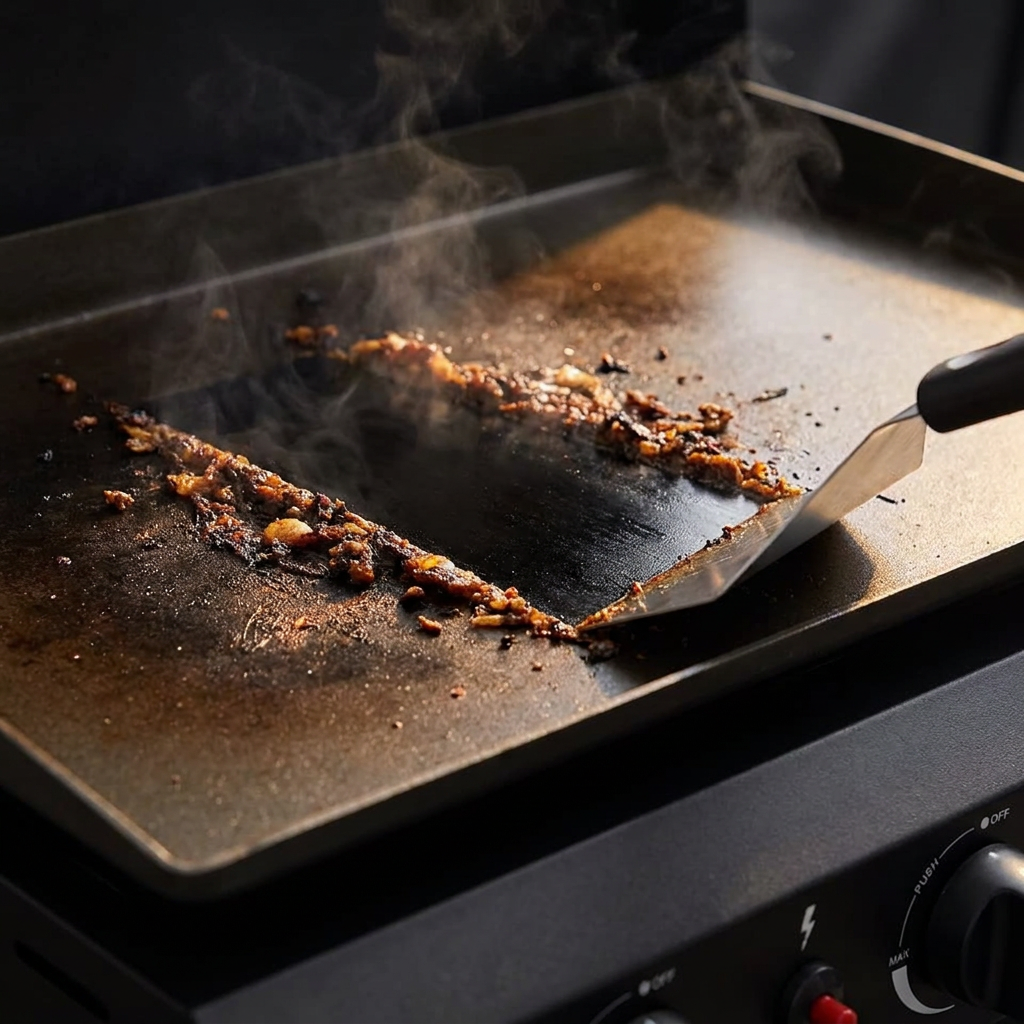
Moving that outside is the quiet reason people end up using these things constantly. And the cleaning itself stops being a chore: no grates to lift, no brush, no soaking — one pass with the scraper that came in the box while the plate is still hot, a wipe, and the hood down.
A flat top is one pass with the scraper that came in the box while the plate is still hot, a wipe, and the hood down. The other half of it is seasoning: steel that gets cooked on and oiled builds a dark, slick layer that keeps building, so the griddle actually works better in year three than it did on day one.
A Grate Can’t Even Hold Half of What You Want to Cook
Count what your grill has dropped into the fire this year. Onions. Shrimp. An egg you were optimistic about. Half the peppers.
A grate is bars with gaps — fine for a thick steak, useless for almost everything else you actually want to eat outside. Flat steel gives you full contact across the whole piece of food, which is what puts an edge-to-edge crust on a smash burger instead of four stripes, and it keeps the fat moving across the plate instead of dropping onto an open flame.
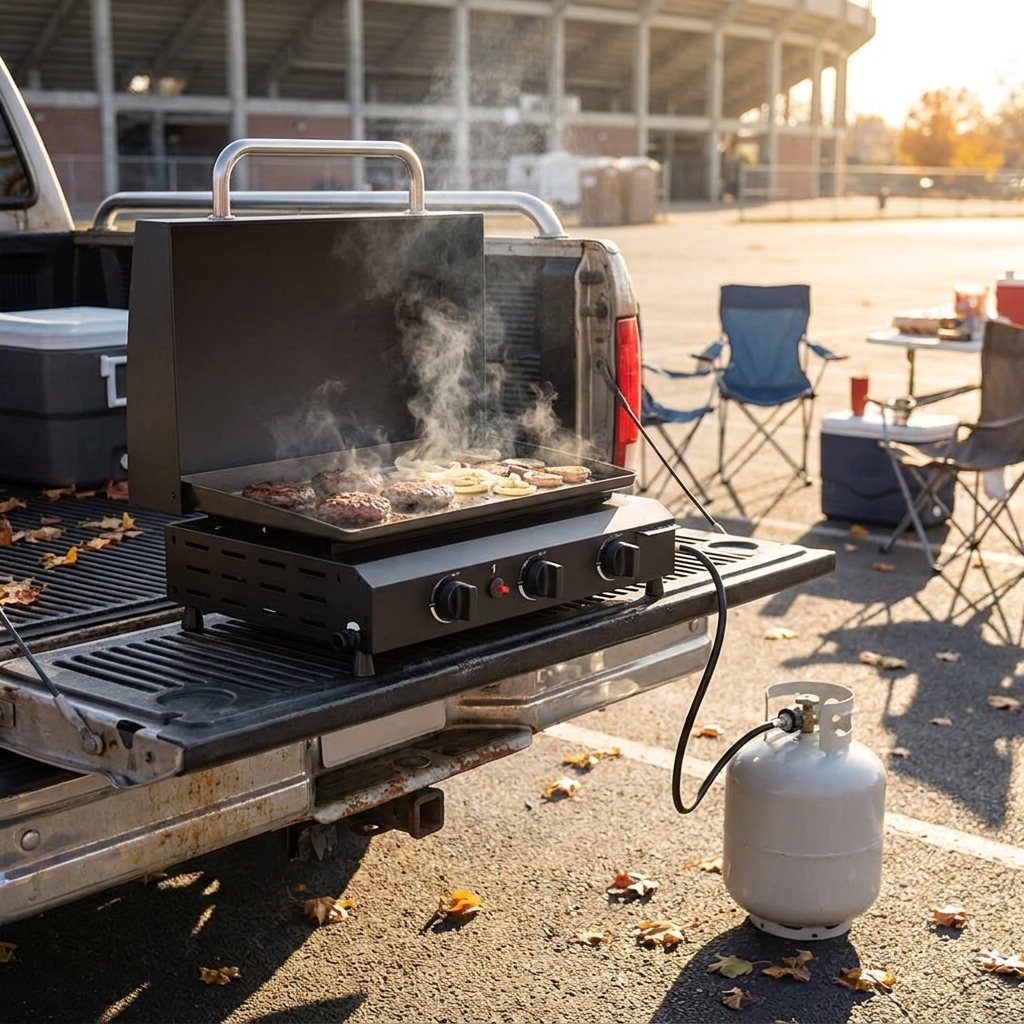
It Goes in the Truck, the Camper or the Boat — Which Is Where It Earns Its Keep
A full griddle station owns a corner of the yard forever. This one sets down on whatever stable, heat-safe outdoor surface you already have — patio table, picnic table, campsite table, the back of a truck — and the fitted cover in the box is what makes it travel and store without getting beaten up in between.
Camping is the single most common reason people buy one of these — more than every other reason put together. RVers pick the size by whether it fits the storage bay, not by the cooking surface. And a striking number of buyers already own a big 28″ or 36″ unit that never leaves the driveway; this is the one that actually goes with them.
Outdoor use only, on a stable surface, clear of anything overhead.
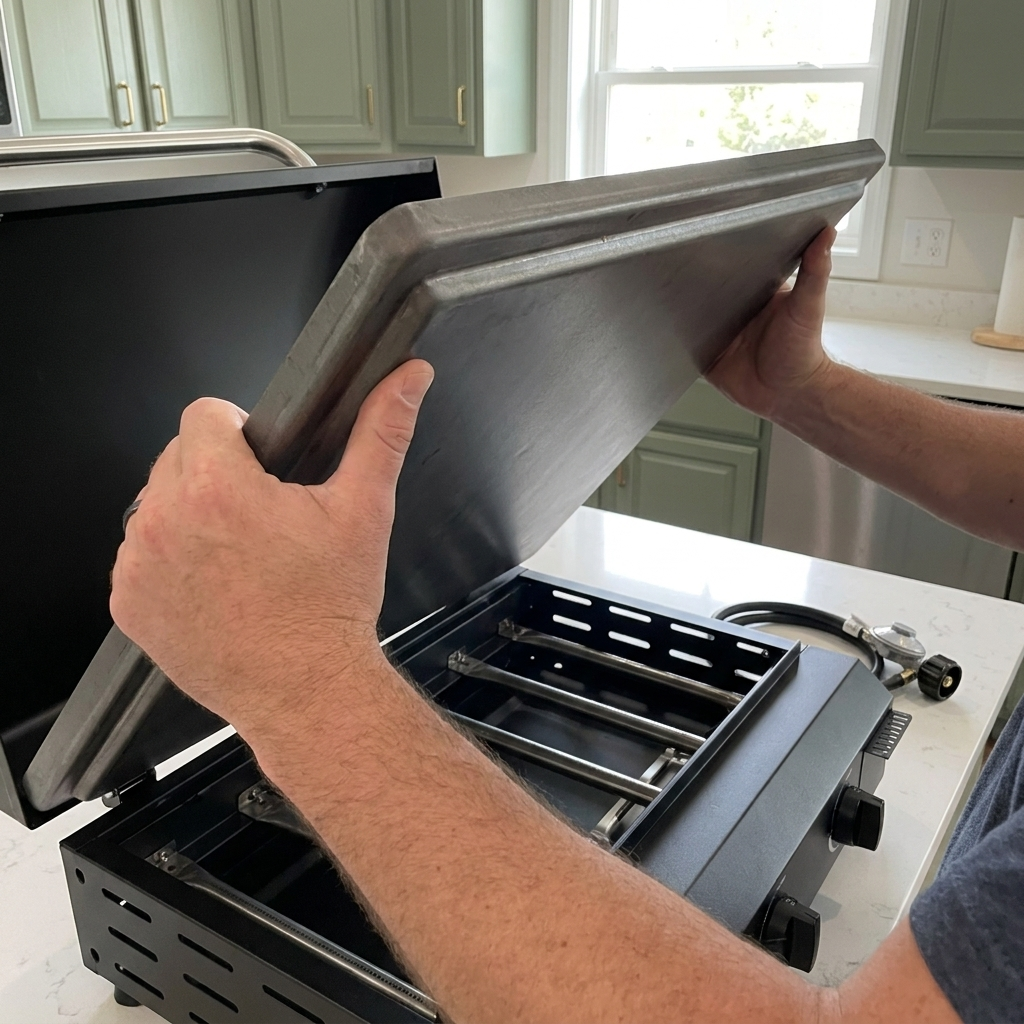
Yes, It’s Heavy. That Is the Entire Point.
Every brand in this category calls its griddle portable and then quietly hopes you don’t lift it. We’ll say it plainly: this is a two-hand carry, and you want it to be.
Almost every complaint people have about a cheap griddle traces back to the same thing — a plate too thin for the heat under it. Thin steel dumps its temperature the second cold patties hit it, so you get grey meat instead of crust. Thin steel is also what warps and leaves grease pooling in the middle for the rest of the griddle’s life. Weight in the plate is the feature; weight in the packaging is not.
You can feel the difference before you ever light it. Pick the plate up and it’s got weight; drop cold patties on it and it doesn’t die. That’s the part worth paying for, and it’s the part that’s invisible in a photo.
It’s Three Moves, Start to Finish
Thin coat of oil on the bare plate, burners on high, let it smoke off. Repeat a couple of times the first day. That’s the dark, slick layer every good flat top is built on — and it keeps improving from there. Follow the care card in the box.
The regulator hose is included — connect it to a standard 20 lb propane tank, open the tank valve slowly so the safety doesn’t trip and leave you stuck on a low flame, then light the burners.
Hot zone to sear, low zone to hold. When you’re done, scrape it down while it’s still hot, wipe, thin coat of oil, hood down and the fitted cover on. Outdoor use only.

What Actually Fits on One Plate
Not a spec sheet. Just what comes off it in a single pass, counted on a full load.
Counts measured on a full load with the burners at working temperature.
Why a Flat Top Beats What’s on Your Patio Now
The grill only ever had one job it did well. Everything else you cook out there — breakfast, onions, shrimp, rice, smash burgers — it does badly or not at all.
| FirePlate™ Flat Top | A gas grill / a bare griddle | |
|---|---|---|
| Small food | Solid steel — onions, eggs, shrimp, rice | Falls straight through the grate |
| Cooking a full meal | Independent zones — sear and hold at once | One temperature, cook in shifts |
| Feeding four | The whole group in one pass | Plate the first batch, reheat it later |
| Melting and finishing | Close the hood over the food | Balance a dome over one burger |
| Breakfast | Eggs, pancakes, bacon, hash browns | Needs a pan set on top of the grill |
| What’s in the box | Tools, fitted cover and 20 lb tank hose | Tools, cover and hose all sold separately |
| Cleanup | Scrape, wipe, close — while it’s hot | Lift grates, brush, scrub |
| Between cooks | Hood down, cover on, done | Open grates, weather and critters |
| Where it lives | Tabletop — sets down and stores away | Owns a corner of the yard |
| Over time | Seasoning builds — better in year three | Grates burn out and get replaced |
What people say about cooking on a flat top instead of a grate
The questions people actually ask before they buy one
Is it hard to season? What if I’ve never done it?
It’s three steps and you do it once: thin coat of oil on the bare plate, burners on high, let it smoke off completely. Repeat a couple of times the first day and you’re done.
The one mistake people make is using too much oil, which leaves a sticky film instead of a hard layer. Thin means thin — wipe most of it back off before you light it. Follow the care card in the box.
One owner who had never done it put it best: “I was concerned that I may not be able to figure it out easily with the seasoning involved and all, but it’s actually fairly simple to do.”
Will it rust?
Seasoned steel is like a cast iron pan: the seasoning is what protects it, and it needs a thin coat of oil and a dry cover. Leave it wet and uncovered and any steel plate will eventually show surface rust.
That’s exactly why the fitted cover is in the box instead of on the upsell page, and why the hood shuts over the plate between cooks. Oil it, close it, cover it — that’s the whole routine.
What’s in the box, exactly?
The griddle, a stainless spatula and scraper set, a fitted cover, and a regulator hose that connects it to a standard 20 lb propane tank. Those are the three things most griddles make you buy separately.
Propane is not included — you’ll use the same 20 lb tank your grill runs on.
What propane does it run on?
A standard 20 lb tank — the one already sitting beside your grill — using the regulator hose that comes in the box.
This matters more than it sounds. Griddles in this class usually ship set up for the little 1 lb green bottles, which drain in three or four meals and cost more per cook than the food does. The adapter is the thing every owner ends up buying separately. Here it is already included.
Can I close the hood while I’m cooking?
Yes — that’s a large part of what it’s for. Dropping the hood over burgers melts cheese in well under a minute, finishes thicker cuts without drying them out, and steams onions or buns if you add a splash of water.
Open it to sear and to get crust. Close it to melt, finish and hold. And close it when you’re done to keep weather and wildlife off the plate.
How much assembly is there?
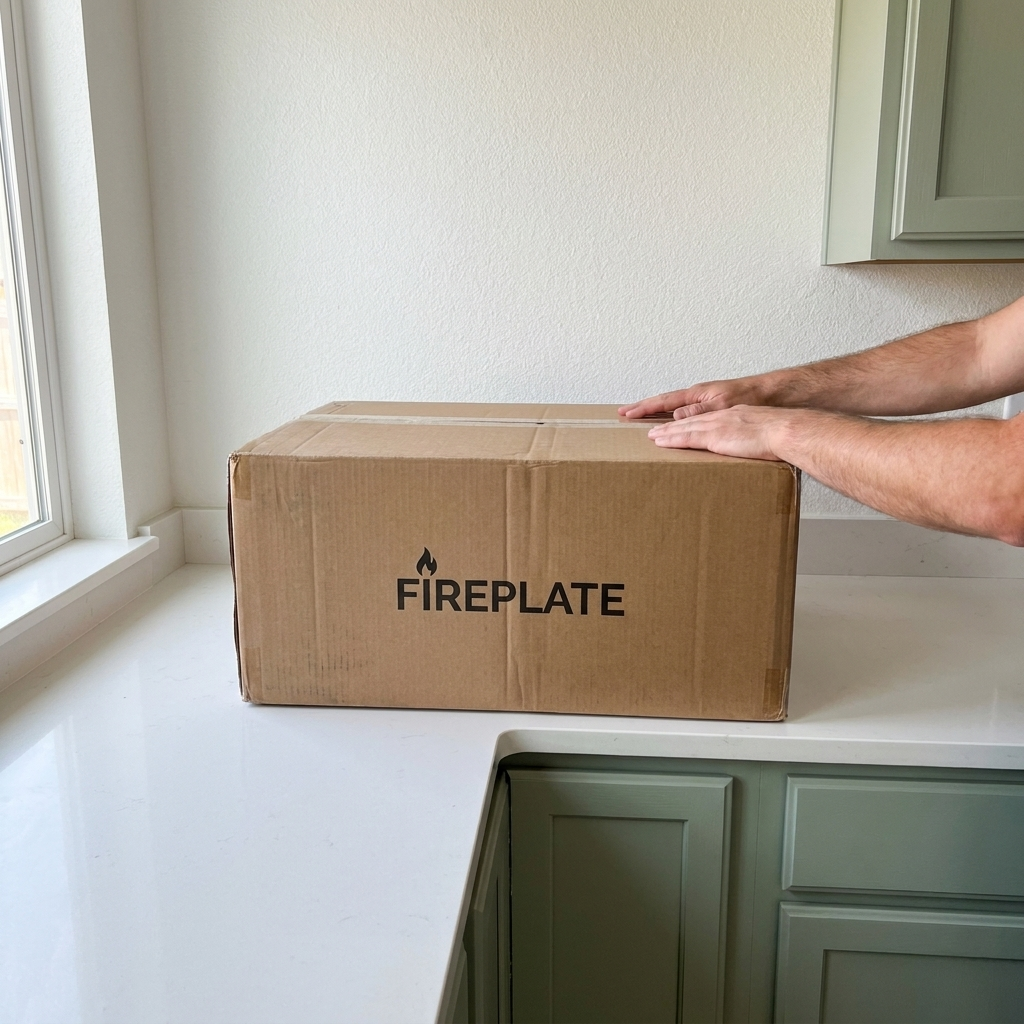
Minimal, and every fastener is counted and bagged before it ships. If anything is missing or damaged in transit, message us and we’ll send the part — you shouldn’t be standing in a hardware store on the weekend you planned to cook.
Does wind blow it out?
Wind is the honest weak point of every outdoor gas burner, which is why the hood matters more than the spec sheet suggests. Set it with the hood angled into the wind, or simply close it between passes, and a breezy day stops being a problem.
Can I use it in my garage or on a covered patio?
No. This is a propane appliance and it is for outdoor use only — never indoors, in a garage, in a tent, or in any enclosed or partially enclosed space, because of carbon monoxide risk. Many apartment and condo fire codes also restrict propane appliances on balconies, so check your local code and your lease.
Set it on a stable, heat-resistant surface, away from anything flammable, clear of anything overhead.
Two family breakfasts out a month is $2,112 a year
Four people, somewhere ordinary, about $22 a head with tax and tip. Twice a month. That is the number most people have never actually added up, because it leaves in twenty-dollar pieces.
At $239.95, this costs about three of those breakfasts — and it makes the same one on a Saturday morning in your own yard, for the price of the eggs.

- Stainless spatula and scraper set
- Fitted cover
- Regulator hose for a 20 lb tank
- Free shipping · 30-day money back
It was never your cooking. It was the grate.
The most repeated thing owners say about these is not about food at all. It’s that people turn up. One put it this way: his kids had never once got excited about a cookout — and now they quote the griddle like it’s the family chef.
Flat steel, independent heat zones, a hood that shuts over the whole plate, and the tools, cover and tank hose already in the box. $239.95 today, with 30 days to change your mind.
Get FirePlate — Save $140 → © 2026 FirePlate. All rights reserved.